How To Choose A Suitable Excavator —— Starting From These Aspects
For professional equipment buyers, selecting a mini excavator is not simply about choosing a machine with the highest horsepower or the largest operating weight. The correct machine size should match the working environment, transportation conditions and expected productivity.
In the compact construction equipment industry, mini excavator size is usually measured by operating weight, but weight alone cannot fully represent machine performance. Two excavators with similar tonnage may have different digging capabilities due to differences in hydraulic systems, boom design, engine configuration and overall machine balance.
For distributors, contractors and rental companies, understanding the relationship between excavator weight, digging depth and working capability is essential for building the right equipment portfolio.
A properly selected mini excavator can reduce operating costs, improve jobsite efficiency and provide better return on investment.
Mini Excavator Size Classification Based on Operating Weight
The operating weight is one of the primary specifications used to classify mini excavators. It directly affects machine stability, transportation requirements and the maximum working force available during excavation.
Generally, mini excavators below 1.5 tons are designed for highly restricted working environments. Their main advantages are compact dimensions, low ground pressure and excellent mobility. These machines are commonly used for landscaping, indoor renovation, small pipeline installation and residential maintenance projects.
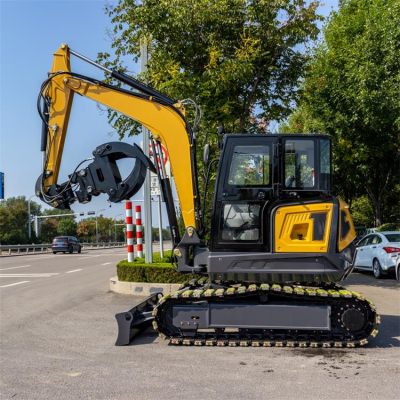
For customers requiring a wider range of applications, 1.5 to 3 ton mini excavators represent the most popular category in the global market. This class provides a better balance between transport convenience and digging performance. Models such as the Hightop 1.8 ton mini excavator and 2 ton compact excavator are widely used in construction, agriculture and municipal projects.
For heavier applications, 3 to 5 ton mini excavators provide higher hydraulic power, stronger digging force and improved stability. They are suitable for foundation excavation, drainage projects and more demanding earthmoving operations.
Buyers looking for specific models can compare detailed parameters through our mini excavator specifications section, where working weight, digging depth, engine power and dimensions are provided for different models.
The Relationship Between Mini Excavator Weight and Performance
Many buyers assume that a heavier excavator always provides better performance. However, professional equipment selection requires a deeper understanding of machine engineering.
Operating weight mainly influences stability. During excavation, the bucket generates reaction forces that transfer through the boom and arm to the machine body. A heavier undercarriage and optimized counterweight system help maintain stability, especially when digging deeper or lifting heavier loads.
However, excessive weight can reduce transportation flexibility and increase logistics costs. For example, a compact 2 ton excavator can often be transported using a small trailer, while a larger machine may require specialized transportation equipment.
Therefore, the ideal excavator size is not necessarily the heaviest model, but the one that provides the best balance between digging capability, mobility and operating cost.
This is why professional buyers usually evaluate complete mini excavator specifications rather than focusing only on tonnage.
Digging Depth Comparison: A Key Specification for Mini Excavator Selection
When evaluating mini excavators, digging depth is one of the most important specifications because it directly determines whether the machine can complete a specific project.
Many buyers focus mainly on operating weight, but in actual engineering applications, digging depth is influenced by multiple factors, including boom length, arm design, hydraulic cylinder stroke and machine structure. A well-designed compact excavator can achieve excellent digging performance even within a smaller weight category.
For example, a 1.5-ton mini excavator is usually designed for light excavation tasks with a digging depth around 1.8 to 2.2 meters. It is suitable for landscaping, cable trenches and small drainage projects.
A 2 to 3 ton mini excavator generally provides a digging depth between 2.2 and 3 meters, making it one of the most versatile categories for construction contractors. These machines can handle foundation preparation, pipeline installation, agricultural improvement and general earthmoving work.
Larger mini excavators in the 4 to 5 ton range can usually reach more than 3 meters of digging depth. Their increased hydraulic power and machine stability allow them to operate efficiently in harder soil conditions and more demanding construction environments.
For buyers comparing different models, it is recommended to check complete technical specifications rather than looking only at the rated digging depth. The combination of digging force, lifting capacity and stability determines the real working capability of an excavator.
More detailed information can be found on our mini excavator specifications page, where different models are compared by operating weight, digging depth and performance parameters.
Mini Excavator Applications: Choosing the Right Size for Different Industries
The best mini excavator size depends largely on the application environment. Professional buyers should select equipment based on actual working conditions rather than simply choosing the largest available model.
In landscaping and residential construction, compact size and transportation flexibility are usually more important than maximum digging force. Machines between 1 and 2 tons are commonly preferred because they can access narrow areas such as gardens, backyards and urban construction sites.
For general construction contractors, 2 to 3 ton mini excavators provide a practical balance between productivity and mobility. They are capable of handling foundation excavation, utility installation, road maintenance and small-scale demolition projects.
In agricultural applications, mini excavators are increasingly used for irrigation channels, land improvement, tree planting and farm infrastructure construction. Models with strong hydraulic performance and optional attachments provide greater versatility.
For rental companies and equipment distributors, choosing several different size categories can cover a wider customer base. A combination of compact models for restricted areas and larger mini excavators for heavier work allows businesses to provide more complete equipment solutions.
Hightop offers multiple compact excavation solutions, including 1 ton mini excavators, 2 ton mini excavators and 3 ton mini excavators, helping global customers select the right machine according to their market requirements.
Key Mini Excavator Specifications Professional Buyers Should Evaluate
When purchasing mini excavators for commercial operations, experienced buyers usually evaluate the complete machine configuration instead of focusing on a single specification.
The engine is the power source of the entire excavator system. A reliable engine provides stable output, better fuel efficiency and longer service life. However, engine power alone does not determine performance because the hydraulic system plays an equally important role.
The hydraulic system controls the speed, smoothness and working force of excavation operations. High-quality hydraulic components allow operators to achieve precise control while reducing energy loss.
The bucket digging force and arm digging force are also critical indicators. Strong digging force allows the machine to work efficiently in compacted soil, clay and gravel conditions.
Another important factor is machine structure. A reinforced undercarriage, optimized counterweight design and durable boom structure directly affect long-term reliability, especially for commercial users who operate equipment every day.
Therefore, professional buyers should evaluate:
machine weight + hydraulic performance + structural design + application requirements
as a complete system.
How to Choose the Right Mini Excavator Size for Your Business
For professional buyers, selecting the right mini excavator is a decision that directly affects equipment utilization, customer satisfaction and business profitability. The largest machine is not always the best choice. The ideal excavator should match the most common working conditions and provide the highest efficiency during daily operations.
For construction contractors, the selection process usually starts with the required excavation depth, working space and transportation conditions. If most projects involve residential construction, utility installation or landscaping, a compact 1.5 to 3 ton mini excavator often provides the best balance between flexibility and performance.
For companies involved in heavier excavation projects, a larger machine with stronger hydraulic performance may be more suitable. A 3 to 5 ton mini excavator can provide improved stability, greater digging force and higher productivity when working with hard soil or deeper excavation requirements.
Equipment rental companies and distributors usually need a wider product range because their customers have different application requirements. Offering multiple sizes allows businesses to serve both small contractors requiring compact machines and professional users needing higher-performance equipment.
Before purchasing, professional buyers should consider the following questions:
What type of projects will the machine mainly handle?
What digging depth and working radius are required?
How will the machine be transported between job sites?
Are replacement parts and technical support easily available in the target market?
By analyzing these factors, buyers can select a mini excavator that provides better long-term value instead of simply choosing a larger model.
For customers comparing different models, Hightop provides detailed product information for each machine, including operating weight, engine specifications, hydraulic performance and working dimensions. Visit our mini excavator product range to compare available models.
Why Choose Hightop Mini Excavators for Global Markets?
As a professional compact construction equipment manufacturer, Hightop focuses on developing mini excavators that combine practical engineering design with reliable manufacturing quality.
For international distributors and contractors, equipment reliability is one of the most important purchasing factors. A machine that performs well in the first few months but requires frequent maintenance will increase operating costs and reduce customer satisfaction.
Hightop mini excavators are designed with attention to key engineering factors, including machine balance, hydraulic efficiency, structural durability and operator usability.
Through continuous improvement of product design and manufacturing processes, Hightop provides compact excavation solutions suitable for different markets and working environments.
Our product range covers various weight classes, allowing customers to select machines according to specific application requirements. Whether the demand is for a compact machine for urban projects or a stronger excavator for construction applications, Hightop provides flexible solutions.
For dealers and bulk buyers, we also support customized configurations according to market requirements, including different engines, attachments and equipment options.
Learn more about our mini excavator manufacturer capabilities and explore how Hightop supports global equipment partners.
Conclusion: Selecting the Right Mini Excavator Size Creates Long-Term Value
Mini excavator size selection is a combination of engineering analysis and business consideration. Weight, digging depth and application requirements must be evaluated together to determine the most suitable machine.
For professional buyers, understanding mini excavator specifications helps reduce purchasing risks and ensures that equipment can deliver reliable performance in real working environments.
By selecting the right model based on project requirements, distributors and contractors can improve equipment efficiency, reduce operating costs and achieve better long-term returns.